
Text Sentiment Analysis Guide: Meaning, Methods & Use Cases
Text sentiment analysis is a natural language processing (NLP) technique used to determine the emotional tone behind a body of text. By analyzing text data, sentiment analysis tools help identify whether the sentiment of a passage is positive, negative, or neutral. This process is essential for understanding public opinion, customer feedback, or brand perception.
The text sentiment meaning refers to the emotional context extracted from written content. It allows businesses and researchers to process large volumes of unstructured data—such as reviews, social media posts, and support tickets—and interpret them at scale.
Sentiment analysis enables organizations to go beyond surface-level text and grasp the emotional impact of their messaging.
Why Analyze the Sentiment of Text?
Understanding how people feel about a brand, product, or service is critical. That's why businesses increasingly rely on sentiment analysis tools to extract and quantify emotional signals in text.
Key Reasons to Analyze Text Sentiment
- Customer insight: Identify how users perceive your product or service.
- Crisis detection: Spot negative feedback trends early.
- Content alignment: Ensure tone of marketing content matches audience expectations.
From a strategic perspective, it answers the question: why analyze the sentiment of text data? Because emotional tone shapes conversions, loyalty, and public trust.
Why sentiment analysis iof text is required becomes obvious when companies face information overload. Automation provides clarity.
How Sentiment Analysis Interprets Text
So how does sentiment detection actually function?
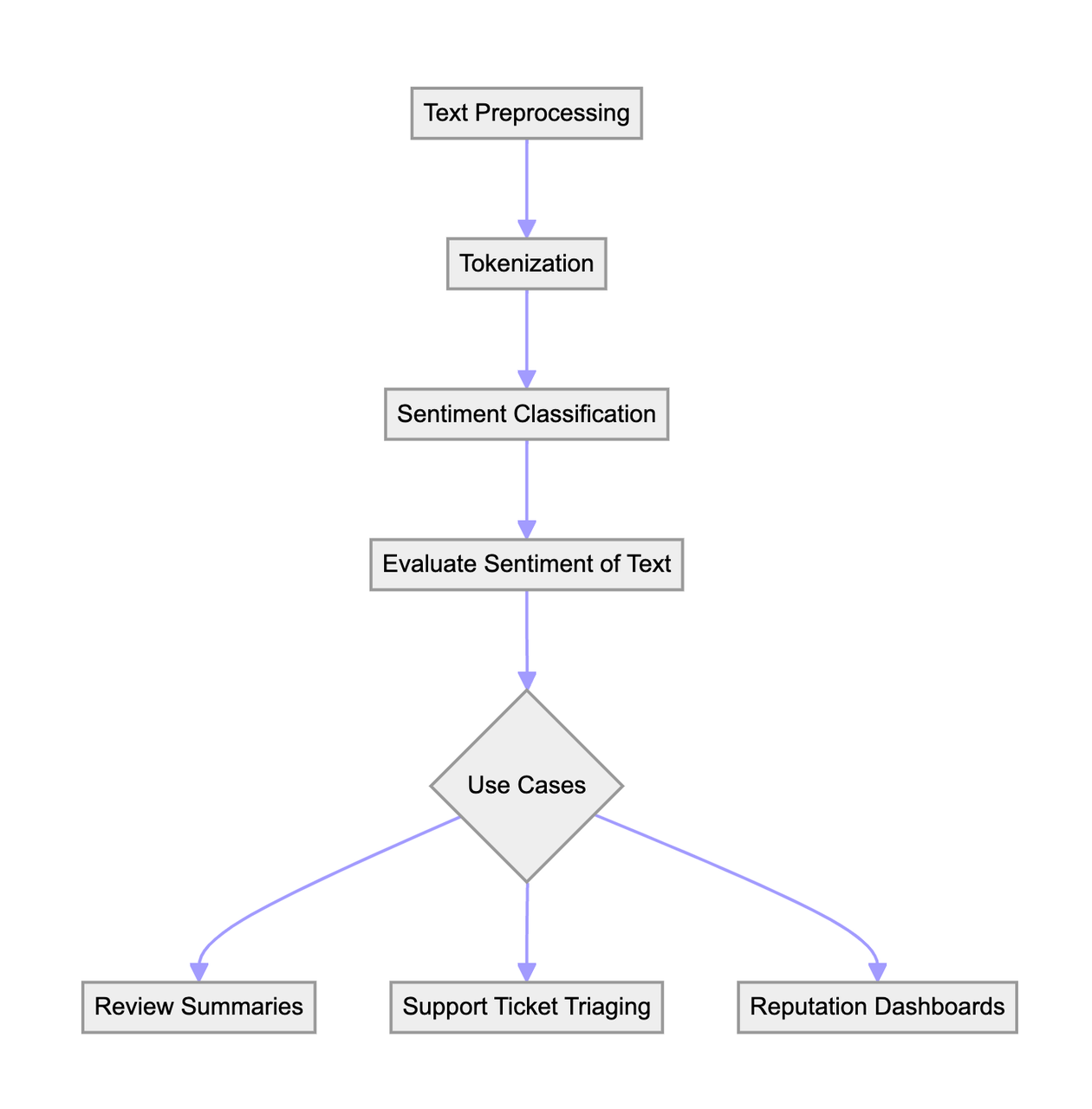
Core Steps in the Process
- Text preprocessing: Remove irrelevant data and normalize language.
- Tokenization: Break down text into words or phrases.
- Sentiment classification: Assign positive, negative, or neutral values.
This process captures the sentiment of text, allowing models to evaluate what is the sentiment of a text in a structured, reproducible way. It is commonly used to power features like:
- Review summaries
- Support ticket triaging
- Real-time reputation dashboards
The term text analysis sentiment describes how emotional tone is inferred from words, phrases, and sentence structure.
A well-built engine can even extract what sentiment analysis can derive from given text—for example, frustration in support queries or satisfaction in testimonials.
Types of Sentiment Analysis Explained
There are several types of sentiment analysis, each with varying granularity:
1. Binary Sentiment Classification
- Categories: Positive or Negative
- Example: Movie reviews or product thumbs-up/down
2. Fine-Grained Classification
- Categories: Very Positive, Positive, Neutral, Negative, Very Negative
- Often used for customer service analytics or app reviews
3. Aspect-Based Sentiment Analysis
- Sentiment is tied to specific features of a product or service
- Example: "The screen is amazing, but the battery is terrible"
4. Emotion Detection
- Goes beyond polarity and classifies emotions like joy, anger, or sadness
Fine-grained classification and polarity detection enable deeper insights into emotional nuances, allowing businesses to personalize responses and predict behaviors.
Supporting Technologies Behind Sentiment Analysis
Behind every sentiment engine lies a stack of powerful technologies:
Core Technologies
- Artificial Intelligence (AI)
- Machine Learning (ML)
- Natural Language Processing (NLP)
These work together with models like:
- Support Vector Machines (SVMs)
- Naive Bayes classifiers
- Word2Vec embeddings
- Neural Networks
- Custom ML models trained on labeled datasets
These algorithms detect hidden patterns and emotional signals in language—at scale and in real time.
Preprocessing and Analytical Techniques for Sentiment Detection
Sentiment analysis depends heavily on linguistic preprocessing:
Key Techniques
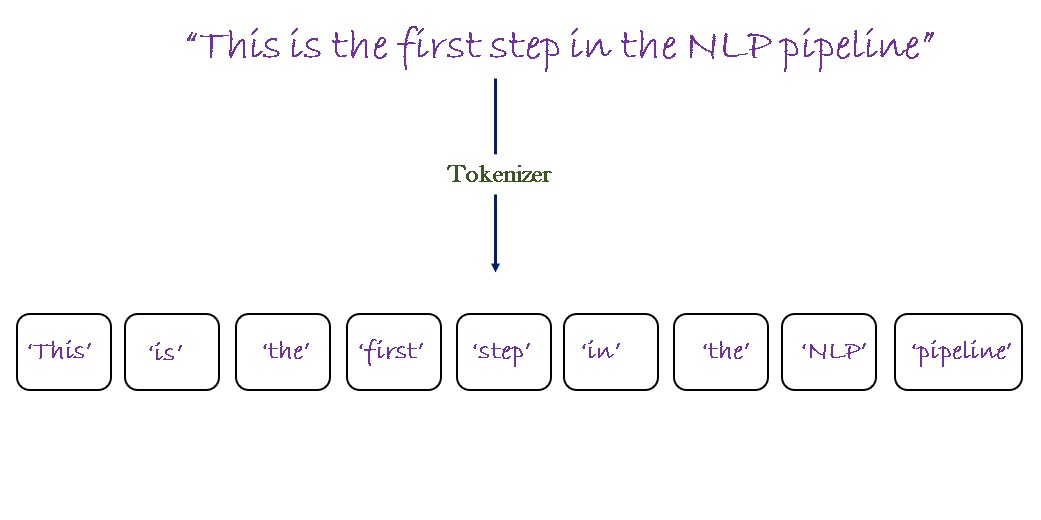
- Tokenization: Splitting sentences into words
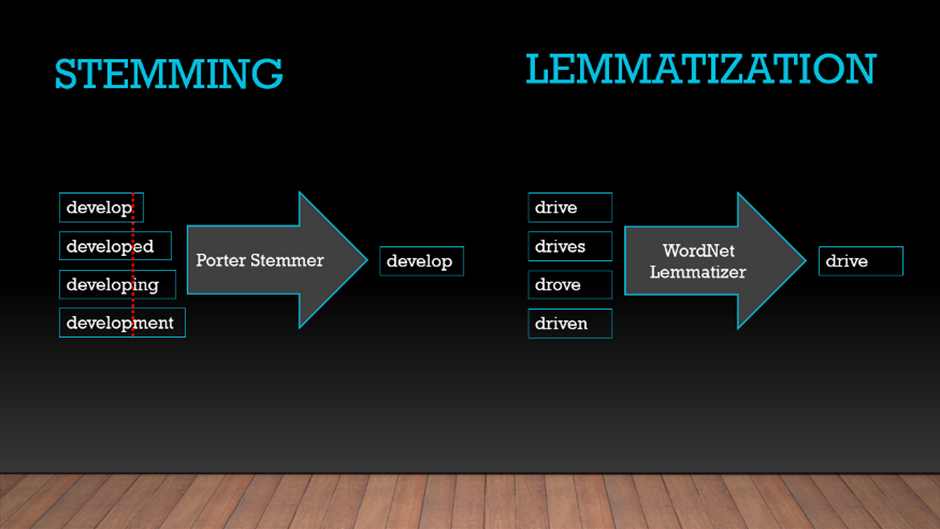
- Lemmatization: Reducing words to base forms (e.g., "running" → "run")
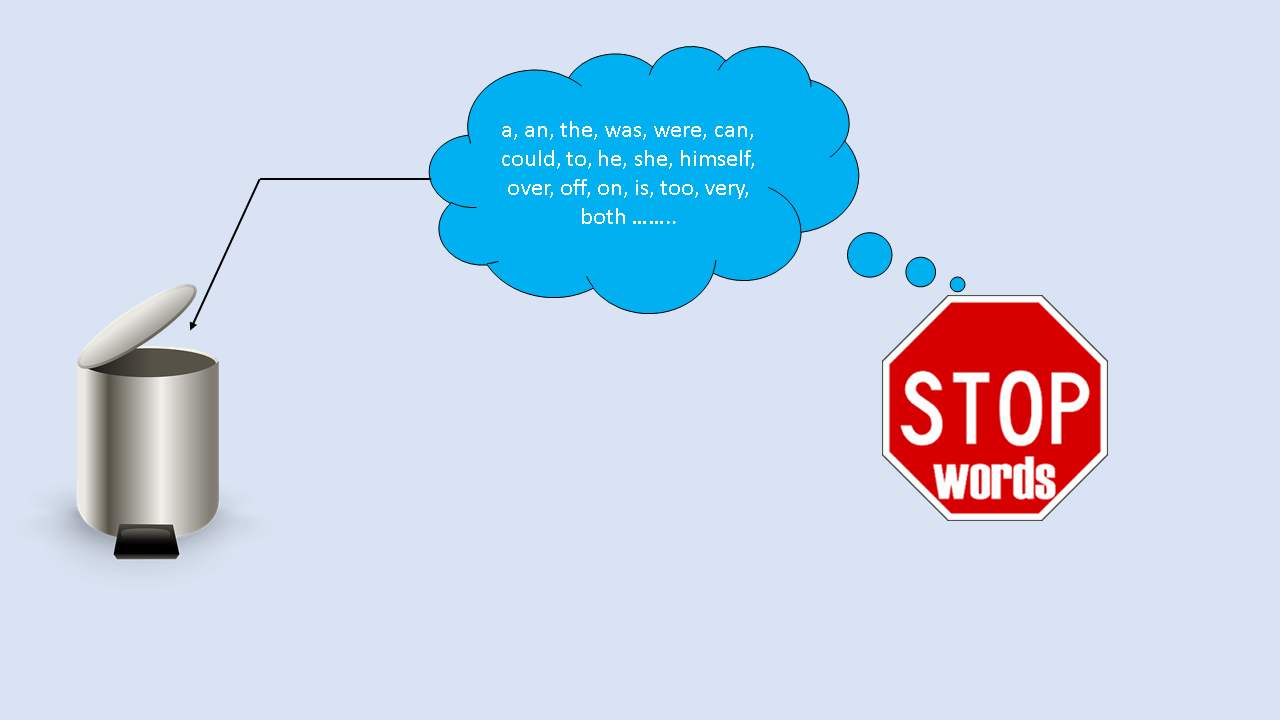
- Stop words removal: Eliminating common but uninformative words (e.g., "the", "is")
- Lexicons: Pre-built dictionaries with sentiment values
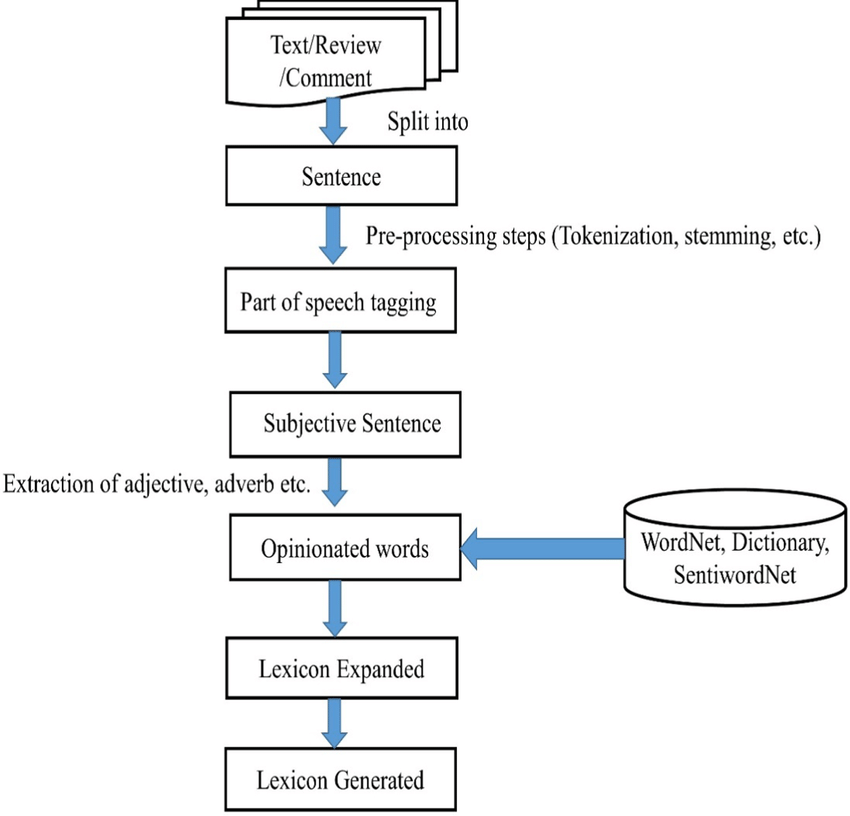
- Data preprocessing: Normalizing text (e.g., lowercasing, punctuation stripping)
- Sentence structure parsing: Helps in identifying negation and emphasis
These tasks ensure that downstream algorithms focus on meaningful patterns rather than noisy inputs.
Tools and Platforms for Sentiment Analysis
The sentiment analysis ecosystem is vast, offering tools for both developers and non-technical users:
Popular Tools & APIs
| Tool | Provider | Key Feature |
|---|---|---|
| Amazon Comprehend | AWS | Entity recognition + sentiment tagging |
| Watson Text Analysis | IBM | NLP + emotion detection |
| Google Cloud Natural Language API | Syntax + sentiment detection | |
| Qualaroo | Qualaroo | On-site feedback sentiment |
Many platforms offer user-friendly survey tools that integrate sentiment detection directly into customer feedback flows.
Sentiment analysis software is now available in SaaS platforms, open-source libraries, and embedded SDKs.
Common Use Cases for Sentiment Analysis
Sentiment analysis powers countless real-world applications:
Business Use Cases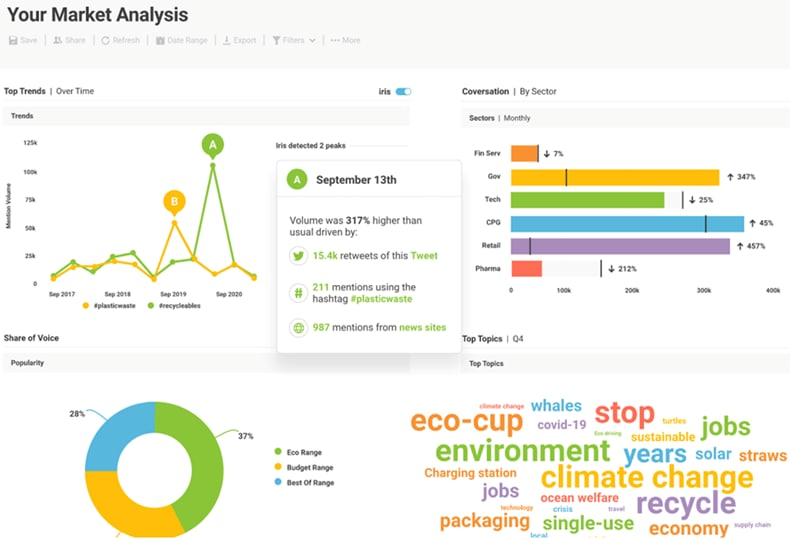
- App reviews: Summarize App Store and Play Store feedback
- Social media monitoring: Track brand sentiment across platforms
- Customer support tickets: Prioritize issues by emotional tone
- Chatbot transcripts: Identify frustration signals
- Blogs and product reviews: Aggregate themes and satisfaction levels
By leveraging this data, businesses can improve product design, tailor communication, and reduce churn.
Industries Adopting Sentiment Analysis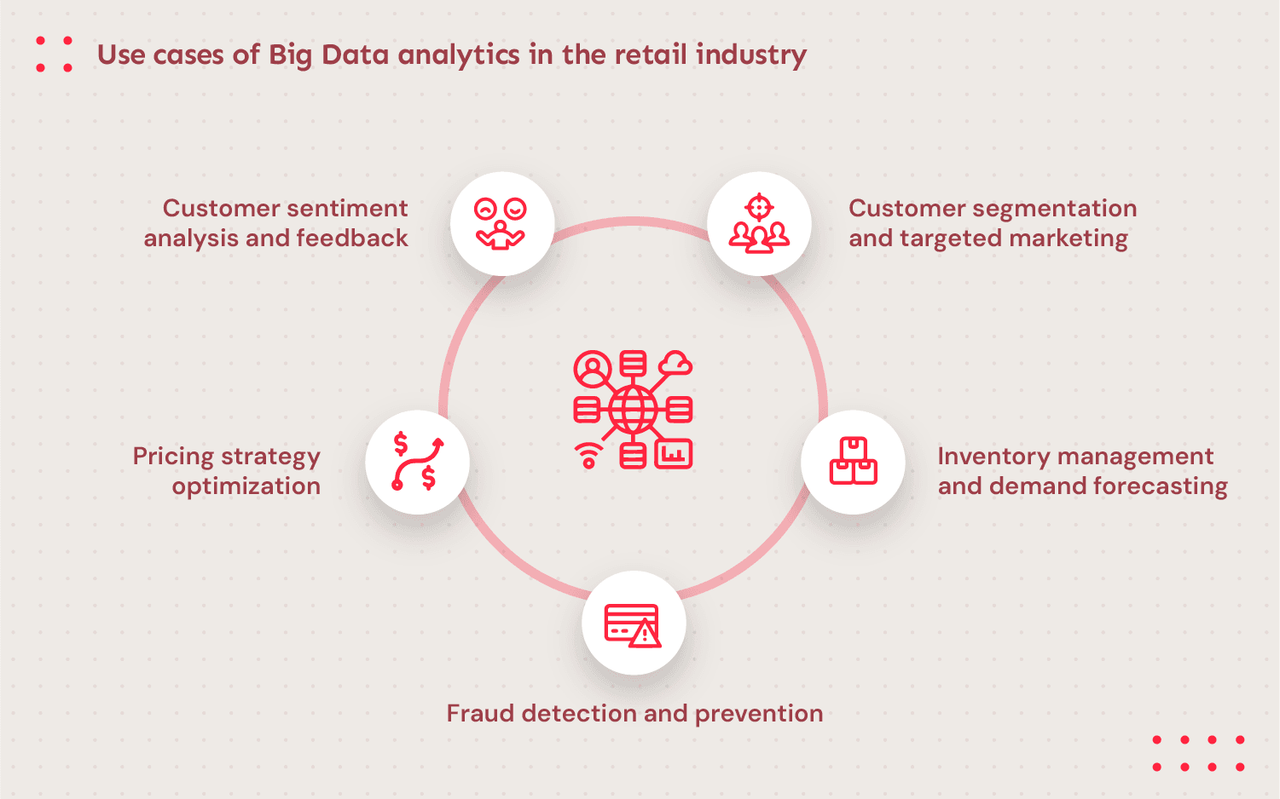
This technology is transforming decision-making across industries:
- Marketers: Optimize ad tone and campaign effectiveness
- Public relations: Manage brand crises and media tone
- Customer service teams: Route urgent or emotional messages faster
- Hospitality industry: Analyze guest reviews for operational insights
- Organizations: From HR to product, teams use it for feedback mining
It's not limited to tech — even traditional sectors now rely on emotional analytics.
Customer Sentiment and Experience Insights
Sentiment analysis helps decode the voice of the customer:
Key Benefits
- Measure customer sentiment in real time
- Benchmark against customer satisfaction surveys
- Extract actionable insights from customer opinions
- Quantify customer effort scores for support process evaluation
Real-time feedback processing enables teams to adapt quickly to user needs and expectations.
How Sentiment Is Scored and Measured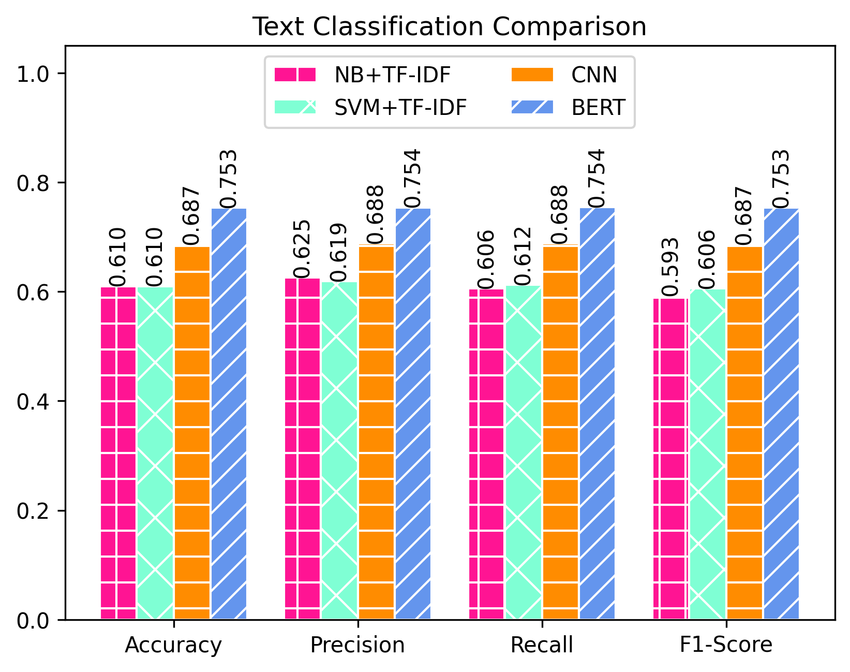
Understanding how sentiment is quantified is key to interpreting results:
Common Scoring Models
| Metric | Description |
|---|---|
| Sentiment Score | Ranges from -1 (negative) to +1 (positive) |
| Net Promoter Score (NPS) | Measures loyalty; often enhanced by sentiment overlays |
| Opinion Ratings | Numerical interpretation of emotional intensity |
| Sentiment Indicators | Flags or tags denoting tone direction |
These scores help product teams and analysts track emotional trends over time.
Challenges and Limitations in Sentiment Analysis
Despite its usefulness, sentiment analysis isn’t foolproof and still faces notable limitations that affect its accuracy and applicability across diverse text sources:
Common Challenges
- Sarcasm & irony: These rely on contextual or tonal cues that are hard for models to detect, often resulting in misclassifications.
- Negation: Phrases like “not bad” or “not great” can confuse algorithms, especially if the model isn’t trained to parse nuanced negation.
- Slang & idioms: These vary widely across cultures, generations, or social platforms, making consistent interpretation difficult.
- Misspellings, emojis & informal grammar: These introduce irregular patterns and noise into the text, complicating feature extraction.
- Domain-specific jargon: Words that carry unique sentiment meanings in specialized fields (e.g., medicine, law, tech) may be misunderstood by general-purpose models.
- Context sensitivity: A word may convey different sentiment depending on its context, which static models often fail to resolve.
Models trained on general datasets may misinterpret niche expressions, informal syntax, or contextual cues—highlighting the importance of domain adaptation and continual retraining.
Visualizing Sentiment for Better Interpretation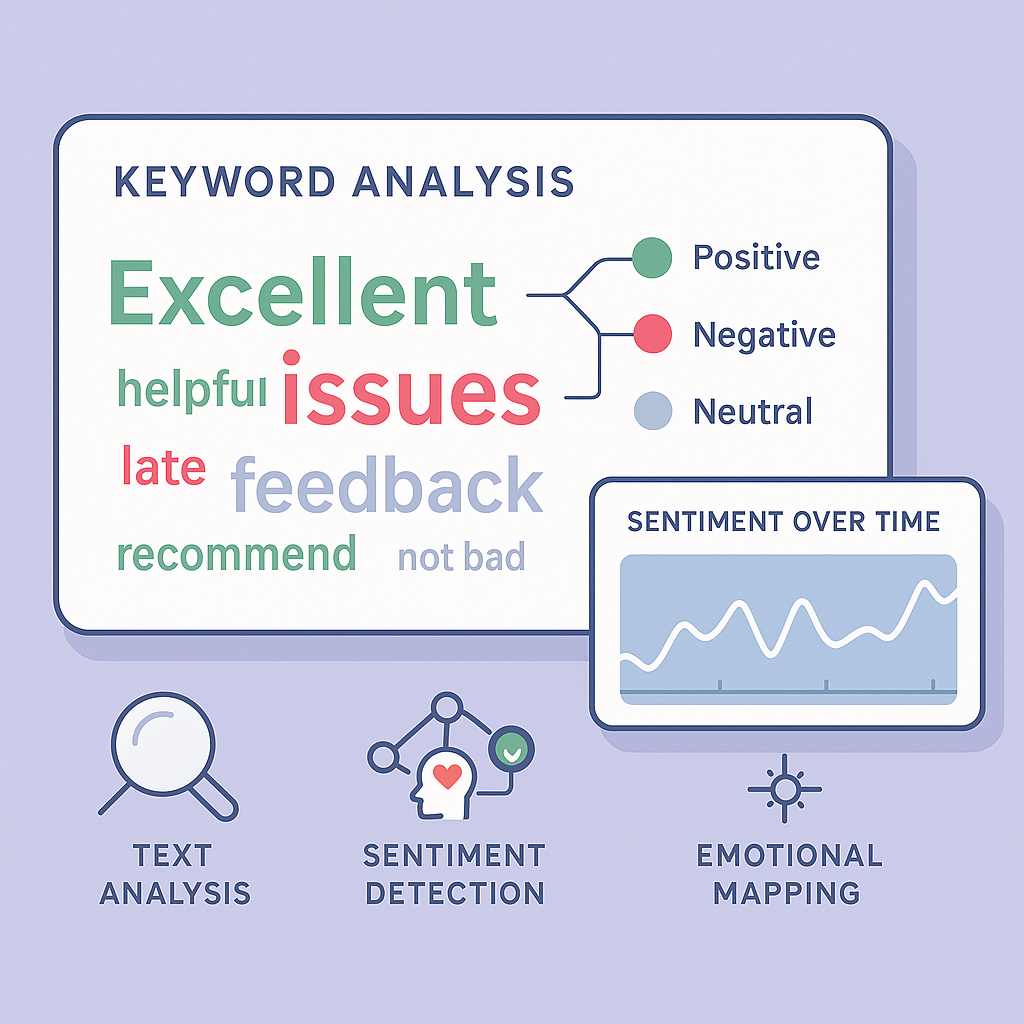
Numbers alone aren’t always meaningful — visuals help transform raw data into something that’s easier to grasp, interpret, and act on. Well-designed graphics, dashboards, and sentiment visualizations allow both technical and non-technical teams to quickly identify emotional trends, sentiment shifts over time, and areas that require attention. Whether you're analyzing thousands of product reviews or monitoring brand perception in real time, visual tools bring clarity and context to otherwise abstract numbers.
Visualization Techniques
- Word Clouds: Show dominant terms in reviews or feedback
- Bar Graphs: Compare sentiment across time or categories
- Sentiment Heatmaps: Map emotion by source, geography, or team
- Keyword Analysis: Link frequent words with emotional tone
- Word Frequency Tables: Show linguistic repetition trends
Clear visuals help non-technical teams understand abstract emotional patterns.
Expanding to Advanced Text Analysis Techniques
Sentiment analysis is often just one layer of a broader NLP strategy.
Related Techniques
- Opinion mining: Detects expressions of judgment or preference
- Text mining techniques: Surface themes, entities, and hidden patterns
- Named-entity recognition (NER): Identifies people, places, or products in text
- Summarization: Condenses large reviews or transcripts into bullet summaries
These tools combine to build a 360-degree view of user feedback and communication tone.
Sentiment analysis is more than a tool — it's a window into human emotion at scale. Whether you're a marketer, researcher, or product strategist, uncovering the emotional undercurrents within your data can fundamentally transform how you communicate, build trust, and drive impact.
People Also Ask
More on Entity Analysis
Proven Google NLP Strategies That Boosted SEO Rankings
Look, if you're still thinking about SEO the way we did five years ago, you're already behind. Google isn't just matching keywords anymore – they're actually understanding what people mean when they…
Text Sentiment Analysis with Python: A Comprehensive Guide
In today's data-driven world, understanding public opinion has become crucial for businesses, researchers, and organizations. Text sentiment analysis with Python offers powerful capabilities to…
Google NLP and Search Ranking: The Complete Guide to Entities, Syntax, Salience, and Moderation
Are you still clinging to the old-school, open-book SEO playbook—think Google’s classic guidelines—hoping your content will climb the ranks just by nailing metadata, stuffing keywords, and hitting a…
How text classification powers smarter sentiment analysis
Sentiment analysis and text classification are foundational techniques in natural language processing (NLP) that help systems understand and categorize human language. While sentiment analysis…
Top Sentiment Analysis Tools to Compare in 2025
A text sentiment analyzer is a tool designed to interpret and classify the emotional tone behind a body of text. Whether it's a product review, a customer email, or a tweet, sentiment analysis tools…