
Proven Google NLP Strategies That Boosted SEO Rankings
Introduction to Google NLP and SEO
Look, if you're still thinking about SEO the way we did five years ago, you're already behind. Google isn't just matching keywords anymore – they're actually understanding what people mean when they search. And honestly? It's pretty wild how sophisticated this stuff has gotten.
Google's NLP arsenal includes some heavy hitters: BERT (which processes context like a human would), RankBrain (their machine learning powerhouse), and MUM (the newer kid on the block that can understand across languages and formats). Then there's the Google Natural Language API – basically Google's way of letting us peek under the hood and use their same text analysis tools.
Here's what's changed: instead of stuffing keywords and hoping for the best, we need to think about user intent, context, and semantic relationships. It's not about tricking Google anymore – it's about aligning with how Google NLP for SEO actually understands content.
The case studies below aren't theoretical. These are real companies with real results, showing exactly what happens when you optimize for Google's NLP instead of fighting against it.
Google NLP Case Studies for Enhanced SEO Rankings
Case Study - Monster India: 94% Traffic Boost with Google NLP Entity Recognition
The Challenge: Monster India was struggling to get their job postings properly recognized by Google. Despite having thousands of active job listings, their organic visibility was mediocre, and they weren't capturing the job-seeking traffic they deserved.
The Strategy: Monster India's SEO team decided to leverage Google's entity recognition capabilities through structured data markup – specifically, Google's JobPosting schema.
Google NLP Implementation:
Instead of just hoping Google would figure out what their pages were about, Monster India started speaking Google's language directly. They implemented JobPosting structured data markup across their job listings, which essentially tells Google's NLP systems: "Hey, this is a job posting, here's the salary, location, company, requirements, and everything else you need to understand this content."
Here's what their JobPosting schema markup looked like:
<script type="application/ld+json">
{
  "@context": "https://schema.org/",
  "@type": "JobPosting",
  "title": "Senior Software Engineer",
  "description": "We are looking for a Senior Software Engineer to join our development team...",
  "datePosted": "2018-04-15",
  "validThrough": "2018-06-15",
  "employmentType": "FULL_TIME",
  "hiringOrganization": {
    "@type": "Organization",
    "name": "TechCorp India",
    "sameAs": "https://www.techcorp.com",
    "logo": "https://www.techcorp.com/logo.png"
  },
  "jobLocation": {
    "@type": "Place",
    "address": {
      "@type": "PostalAddress",
      "addressLocality": "Bangalore",
      "addressRegion": "Karnataka",
      "addressCountry": "IN"
    }
  },
  "baseSalary": {
    "@type": "MonetaryAmount",
    "currency": "INR",
    "value": {
      "@type": "QuantitativeValue",
      "minValue": 800000,
      "maxValue": 1200000,
      "unitText": "YEAR"
    }
  },
  "qualifications": "Bachelor's degree in Computer Science, 5+ years experience in Java/Python",
  "responsibilities": "Develop scalable web applications, lead code reviews, mentor junior developers",
  "skills": "Java, Python, Spring Framework, MySQL, REST APIs"
}
</script>
The beauty of this approach? Google's NLP systems work by identifying entities – distinct "things" like companies, locations, salaries, job titles. Without structured data, Google has to guess: is "Senior Engineer" a job title or company name? Is "$80K" the salary or company revenue? Schema markup eliminates this guesswork by explicitly labeling each entity. When Google's crawlers encounter properly structured data, their entity recognition algorithms instantly understand "this number = salary, this text = job title, this location = workplace." It's like giving Google a perfectly organized filing cabinet instead of a messy pile of papers.
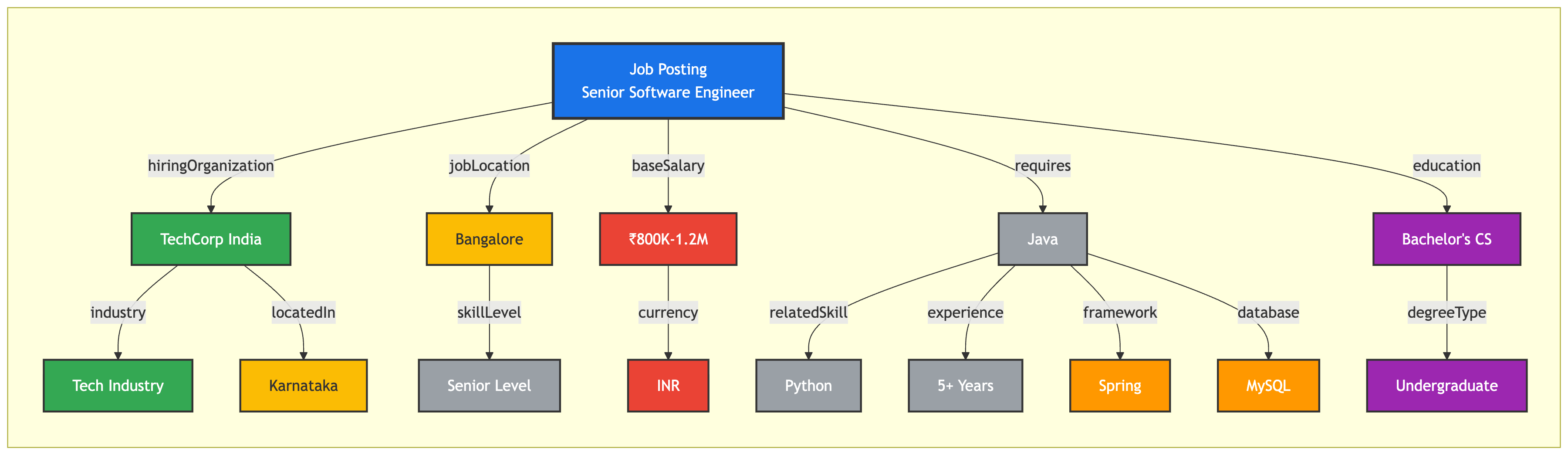
The Results: The results were honestly pretty incredible:
- 94% increase in organic traffic to job details pages
- 10% increase in actual job applications
- Success was so significant they rolled it out to Monster Gulf, Monster Philippines, Monster Singapore, and Monster Malaysia
- Doubled organic traffic across all new regions after implementation
What's really telling here is that Monster India didn't just get more traffic – they got more relevant traffic that converted better. When Google understands exactly what your content is about, it sends you the right people.
Key Takeaway: When you align your content structure with Google's entity recognition system, you're not just optimizing for SEO – you're making it impossible for Google to misunderstand what your content offers.
Case Study - How the Atlanta Hawks Cracked Social Sentiment for SEO Success
The Challenge: The Atlanta Hawks faced a common problem in professional sports marketing – their social media engagement was flat, and their content wasn't resonating with fans. They needed to understand not just what fans were saying, but how they felt about different types of content.
The Strategy: The Hawks implemented Google sentiment analysis tools to understand the emotional tone of fan interactions and optimize their content strategy accordingly.
Google NLP Implementation:
Using Google's Natural Language API for sentiment analysis, the Hawks analyzed thousands of fan comments, posts, and interactions across social platforms. The key insight? They discovered that certain types of content consistently generated positive sentiment while others fell flat.
The sentiment analysis revealed that behind-the-scenes content and player personality pieces generated much more positive emotional responses than traditional game highlights. This wasn't just about engagement metrics – it was about understanding the feelings behind the engagement.
They restructured their content calendar around these sentiment insights, focusing heavily on content types that consistently generated positive emotional responses from their fanbase.
The Before/After Content Strategy Shift:
Before (Traditional approach):
- Standard game highlights and stats-focused content
- Generic promotional posts about upcoming games
- Corporate-style messaging that felt distant from fans
- Content that focused primarily on wins/losses and player statistics
After (Sentiment-optimized approach):
- Behind-the-scenes content featuring player personalities and interactions
- Creative, fan-engaging concepts like "Swipe Right Night" (Tinder-inspired matchmaking at games)
- Meme-culture content and trending topic participation
- Interactive campaigns that made fans feel like part of the team's personality
- Content that celebrated the city of Atlanta, not just basketball
- Real-time, authentic responses to current events and social trends
The Hawks' content pillar strategy used sophisticated tagging to track what resonated:
- Basketball storytelling (game content, but with narrative focus)
- Community outreach (connecting with Atlanta culture)
- Player personality (humanizing athletes)
- Fan interaction (making followers feel included)
Specific Content Changes:
- Spotify playlist battles with other teams during winning streaks
- Creative thank-you messages to fans (like their famous 19-game winning streak celebration)
- Dating app integration at games with special suites for matched fans
- Meme-style responses to game situations and NBA trends
The Results: The sentiment-driven approach delivered remarkable results:
- 127% increase in video views within three months
- 170% boost in audience growth in the same period
- Significantly improved engagement rates across all social platforms
- Better brand sentiment scores in social listening tools
The Hawks basically cracked the code on what their fans actually wanted to see, not just what they thought fans should see.
Key Takeaway: Google sentiment analysis isn't just about understanding your own content – it's about understanding the emotional landscape your audience operates in. When you optimize for positive sentiment, you're optimizing for genuine human connection.
Case Study - The Rankability SEO Experiment: From Invisible to Top 3 in 24 Hours
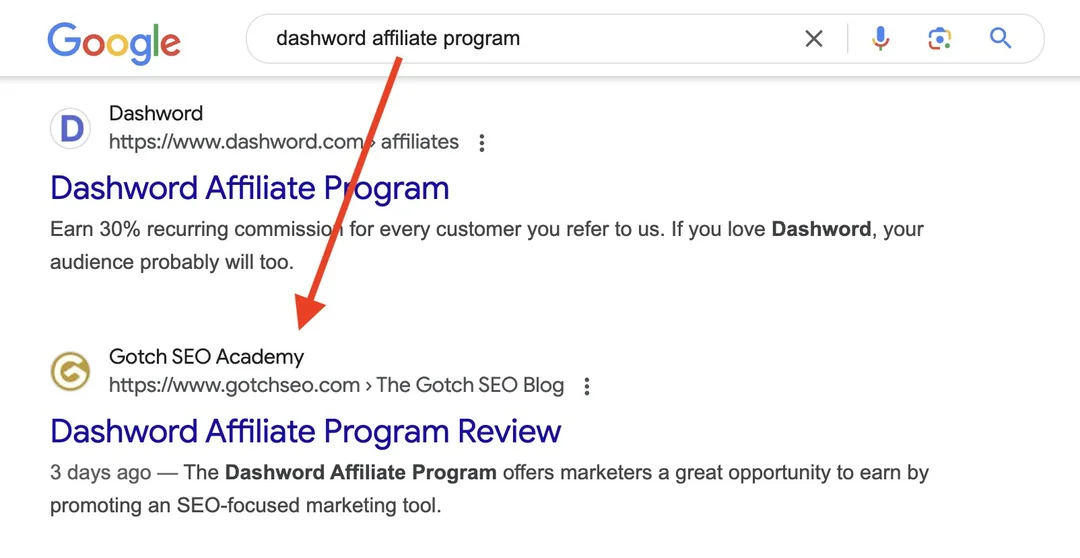
The Challenge: A marketing team was building content clusters around affiliate program comparisons. They were targeting "Dashword Affiliate Program" but their initial approach – publishing AI-generated content without NLP optimization – was a complete flop.
The Initial Failure: Their first attempt was pretty painful to watch. They published a quick AI-generated article without any Google NLP considerations. The content scored just 15 on Rankability's relevance scale and never even broke into the top 100 search results after months of being live.
The Google NLP Breakthrough:
Here's where it gets interesting. Instead of doubling down on traditional SEO tactics, they decided to reverse-engineer what Google's NLP systems were actually looking for in top-ranking content.
Using Rankability's NLP analysis tools (which are based on Google's own natural language processing), they identified the specific semantic patterns and entity relationships that Google expected for queries about affiliate programs.
The process was surprisingly straightforward:
- They analyzed top-ranking competitors to extract NLP keywords and semantic patterns
- Used this prompt: "Create an SEO content outline for 'Dashword Affiliate Program' using these NLP keywords: [LIST OF NLP KEYWORDS FROM RANKABILITY]"
- Rebuilt their content around these Google-recognized semantic elements
The Results: What happened next is honestly pretty mind-blowing:
- Content relevance score jumped from 15 to 63 in just 11 minutes of optimization work
- Ranking position: Within 24 hours, the post moved from completely invisible to top 3 on Google
- Sustained performance: Rankings held strong over the following months
- Scalable success: They applied the same methodology to 15+ other affiliate comparison articles with similar results
Key Takeaway: Google NLP optimization isn't about gaming the system – it's about understanding the semantic patterns Google expects for specific query types. When you nail these patterns, the results can be almost instantaneous.
Case Study - Surfer SEO's Sentiment Analysis Deep Dive: 17,500 Pages Analyzed
The Challenge: The team at Surfer SEO wanted to understand whether Google actually considers content sentiment as a ranking factor. They analyzed 17,500 pages across multiple industries to see if sentiment patterns correlated with search rankings.
The Research Process: Using Google's sentiment analysis capabilities alongside their own tools, Surfer analyzed thousands of search results to understand sentiment distribution across different query types.
Google NLP Implementation:
Their analysis used Google's Natural Language API to evaluate sentiment scores across top-ranking pages for hundreds of different keywords. What they discovered challenged a lot of conventional SEO wisdom.
For most query types, they found that 84% of top-ranking results carried positive sentiment. But here's where it gets interesting – for certain query types, particularly those around problems or concerns, negative sentiment actually performed better.
Take their example of "fear of having braces" – the top-ranking results were split 50/50 between positive and negative sentiment. The positive content focused on benefits ("you'll look great, be healthier"), while the negative content acknowledged fears ("here's why you're afraid, and we understand").
The Results: Their sentiment analysis revealed several key insights:
- 84% of analyzed SERPs are dominated by positive sentiment results
- Query intent matters more than blanket positivity – problem-aware content sometimes needs negative sentiment
- Sentiment patterns correlated with search rankings proved more important than simply being positive
- Mixed SERPs showed clear patterns – certain positions favored certain sentiment types
Key Takeaway: Google sentiment analysis isn't about making everything sound positive. It's about matching the emotional tone that users expect for specific query types. Sometimes acknowledging problems (negative sentiment) builds more trust than forced positivity.
Impact of Google NLP on Modern SEO Strategies
Here's the thing – Google NLP has fundamentally changed what SEO success looks like. We're not playing the same game we were five years ago.
Entity Recognition is Everything: The Monster India case shows us that when you structure your content the way Google's entities system expects, you're not optimizing for SEO – you're optimizing for understanding. Google rewards clarity, and entity markup is the clearest way to communicate what your content is actually about.
Sentiment Matters More Than We Thought: The Atlanta Hawks and Surfer SEO studies prove that emotional tone isn't just a "nice to have" – it's a ranking signal. But it's not about being artificially positive. It's about matching the emotional expectations of your audience for specific query types.
Speed of Results Has Changed: The Rankability case study is honestly a little scary – going from invisible to top 3 in 24 hours just by aligning with Google NLP patterns. This suggests that when you get the semantic elements right, Google can recognize and reward optimized content almost immediately.
The Old Playbook is Dead: Keyword density, exact match domains, and link schemes are increasingly irrelevant. Google's NLP systems are sophisticated enough to see through most traditional SEO tactics. The sites winning now are the ones that genuinely match user intent and provide comprehensive, contextually relevant information.
Future-Proofing Your Strategy: As Google continues developing more advanced NLP capabilities, the gap between "optimized for Google" and "actually helpful for humans" is disappearing. The case studies above show that the most successful approaches align with Google's understanding rather than trying to manipulate it.
The bottom line? Google NLP optimization isn't a tactic – it's a fundamental shift in how we think about content creation and SEO strategy. The companies winning are the ones who've stopped trying to trick Google and started trying to help Google understand them better.
People Also Ask
More on Entity Analysis
Text Sentiment Analysis with Python: A Comprehensive Guide
In today's data-driven world, understanding public opinion has become crucial for businesses, researchers, and organizations. Text sentiment analysis with Python offers powerful capabilities to…
Google NLP and Search Ranking: The Complete Guide to Entities, Syntax, Salience, and Moderation
Are you still clinging to the old-school, open-book SEO playbook—think Google’s classic guidelines—hoping your content will climb the ranks just by nailing metadata, stuffing keywords, and hitting a…
How text classification powers smarter sentiment analysis
Sentiment analysis and text classification are foundational techniques in natural language processing (NLP) that help systems understand and categorize human language. While sentiment analysis…
Top Sentiment Analysis Tools to Compare in 2025
A text sentiment analyzer is a tool designed to interpret and classify the emotional tone behind a body of text. Whether it's a product review, a customer email, or a tweet, sentiment analysis tools…
Text Sentiment Analysis Guide: Meaning, Methods & Use Cases
Text sentiment analysis is a natural language processing (NLP) technique used to determine the emotional tone behind a body of text. By analyzing text data, sentiment analysis tools help identify…